
The USN Journal is one of the most useful forensic artifacts on an NTFS volume, but it can also be extremely noisy.
From Raw Data to Actionable Findings
CQUSNDeepAnalyzer processes the raw $J stream and can optionally use the MFT for full path reconstruction.
It also includes built-in YARA rules, behavioral detection, and enrichment from EVTX and Prefetch data.
In the demo, we run the tool against a real journal dump and immediately uncover several interesting findings:
1. More than 1,500 rename records in a burst.
2. Nearly 50,000 file deletions.
3. Fifteen new file extensions appearing only in the last part of the timeline.
4. Search for known cryptominer binaries.
5. Nearly 400 related events across 53 files.
The combination of mass renames, mass deletes, and newly appearing extensions is especially interesting because it can be associated with early-stage ransomware activity.
Interactive Forensic Analysis
The tool deals with huge amounts of records and presents the findings in an interactive HTML report.
Instead of manually reviewing thousands of raw entries, investigators can explore:
1. An activity timeline.
2. Severity-ranked findings.
3. Reason flags over time.
4. An hour-by-day heatmap.
5. A Sankey diagram connecting reasons, file extensions, and paths.
6. File extension statistics.
7. A path treemap showing where suspicious activity occurred.
Every underlying record remains searchable and filterable, and the results can be exported to CSV for further analysis.
Why It Matters
During investigation, the biggest challenge is often not collecting forensic data, but finding the important activity hidden inside it.
CQUSNDeepAnalyzer helps transform a raw USN Journal into a structured timeline that makes suspicious file operations, malware indicators, and behavioral patterns much easier to investigate. From a raw journal blob to an investigation-ready timeline. That is CQUSNDeepAnalyzer.

If you’re reading this article, use the discount code CQBLOG_AMSC27_HACKS85 at checkout – a special offer created exclusively for readers of this article. The code applies to our flagship course Advanced Microsoft Security Course, which takes place only once a year, and is valid until October 25, 2026. Take advantage of this exclusive opportunity and secure your spot.
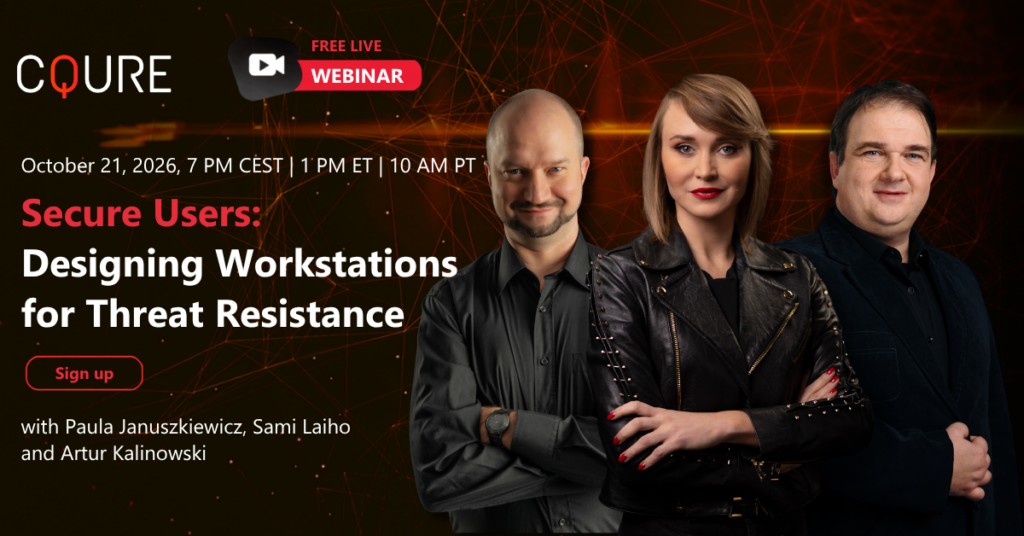
Join our FREE live webinar:
Secure Users: Designing Workstations for Threat Resistance
Workstation security depends on how privileged access, authentication, endpoint configuration, and monitoring work together.
Join Paula Januszkiewicz, Sami Laiho, and Artur Kalinowski for a practical session on designing and deploying Privileged Access Workstations (PAWs), implementing passkeys securely, and identifying workstation and identity misconfigurations that weaken security.
Through practical demonstrations, discover how to strengthen workstation defenses, identify the authentication events and security changes that matter, and connect endpoint and identity activity to actionable detections. You will also learn how to validate that security evidence is collected and alerts trigger as expected.
Leave with an actionable checklist for PAW design, passkey deployment, workstation hardening, configuration reviews, and monitoring validation.
Register for free:
👉 https://luma.com/SecureUsers
Want to know more?